The Radiant Presence: A Glimpse into the Al-Rawdah al-Sharifah
✨For millions of Muslims worldwide, the city of Medina holds a profound spiritual significance, an emotional pull unlike any other. At its heart lies Masjid al-Nabawi, the Prophet’s Mosque. Within its sacred confines is the most revered spot of all: the Roza-e-Rasool.
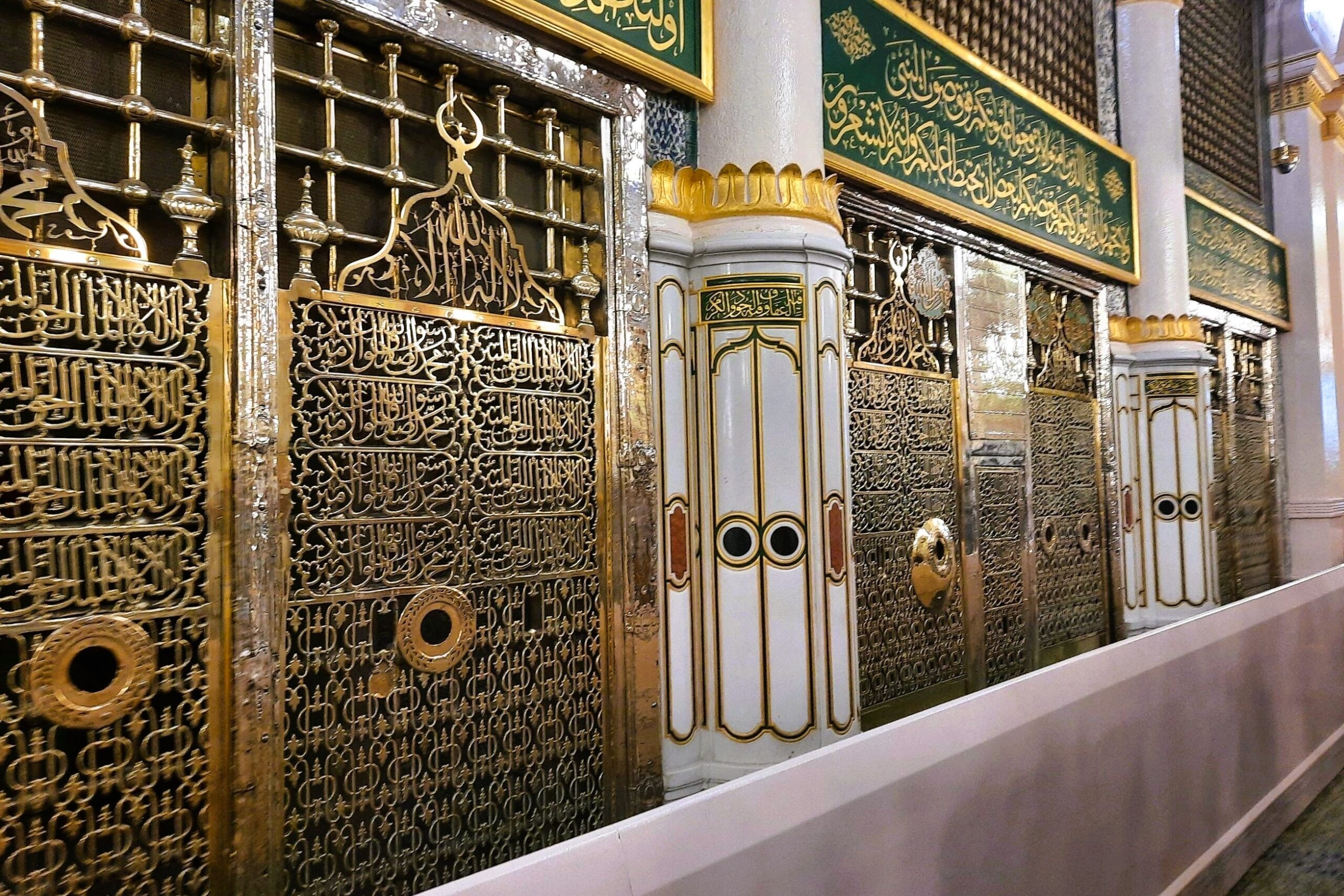
The Roza-e-Rasool, meaning “The Garden of the Prophet,” is the blessed tomb of Prophet Muhammad (peace be upon him), situated in a section of the mosque known as the Rawdah ash-Sharifah. This area, often referred to as one of the gardens of Paradise, is where the Prophet’s earthly journey concluded. His noble body rests here in eternal peace.
A Place of Tranquility and Reverence
Stepping into Masjid al-Nabawi is an experience that transcends the ordinary. It has a vastness, a serene atmosphere, and the hushed prayers of countless pilgrims. This creates an aura of profound tranquility. As one approaches the green dome, a sense of awe and deep respect envelops the soul. This iconic dome marks the location of the Prophet’s tomb. It acts as a beacon of spiritual light for believers across centuries.
The Rawdah ash-Sharifah itself is easily distinguishable by its green carpet, contrasting with the red carpet of the rest of the mosque. It is a place of immense barakah (blessings). Here, prayers are believed to be readily accepted. Pilgrims often strive to offer two units of prayer (nafl) within this sacred space. They seek closeness to the Prophet and his divine blessings.
More Than Just a Tomb
The Roza-e-Rasool is not merely a historical grave; it is a living source of inspiration and spiritual connection. It serves as a constant reminder of the Prophet’s life and teachings. His unwavering dedication to Islam is also reflected here. Standing before his resting place, one cannot help but reflect on his immense sacrifices, his boundless compassion, and his perfect character.
Within the Roza-e-Rasool are also the graves of two of the greatest figures in Islamic history: Abu Bakr al-Siddiq and Umar ibn al-Khattab. They were the first two Caliphs of Islam and the beloved companions of the Prophet. Their presence alongside the Prophet further amplifies the sanctity of this blessed site. It reminds us of the strong bonds of brotherhood and leadership that characterized early Islam.
A Journey of Love and Longing
For Muslims, visiting the Roza-e-Rasool is often the culmination of a lifelong dream, a pilgrimage fueled by love and longing for the Prophet. It is a moment of deep introspection, gratitude, and heartfelt supplication. Many shed tears of joy and emotion, overwhelmed by the privilege of being in such close proximity to the Messenger of Allah.
While access to the immediate vicinity of the Roza is structured to ensure peace and order, the spiritual connection felt by pilgrims permeates the entire mosque. Whether one is praying in the Rawdah or simply sitting in contemplation within the grand mosque, the presence of the Prophet’s blessed resting place instills a profound sense of peace and belonging.
A Timeless Legacy
The Roza-e-Rasool stands as a timeless testament to the enduring legacy of Prophet Muhammad (PBUH). It is a place where history, spirituality, and devotion intertwine, drawing millions each year. They connect with the heart of Islam. It is a reminder that even after his physical departure, the Prophet’s guidance, his love, and his light continue to illuminate the path for humanity.
May Allah grant us all the opportunity to visit this sacred sanctuary and experience its profound blessings.