A Spiritual Journey to the Prophet’s Mosque in Madinah
🕌 Al-Masjid an-Nabawi, the Prophet’s Mosque, transcends its status as an architectural marvel. As the second holiest site in Islam, it serves as a cornerstone of the Muslim faith and the final resting place of the Prophet Muhammad (PBUH). Millions of Muslims travel to the illuminated city of Madinah, Saudi Arabia, to experience this pivotal spiritual destination during Hajj, Umrah, or a dedicated Ziyarah (visit).
From its humble beginnings as an open-air courtyard in 622 CE to its present-day grandeur, the mosque stands as a living testament to Islamic history. This guide explores its profound significance, its most sacred locations, and the essential etiquette for a fulfilling visit.
The Profound Significance of the Prophet’s Mosque
A famous Hadith (Prophetic saying) highlights the immense reward of praying here:
“One prayer in my mosque is better than a thousand prayers in any other mosque, except for Al-Masjid al-Haram (in Makkah).” – Prophet Muhammad (PBUH)
While the entire complex offers immense blessings, three areas hold unique spiritual status:
1. Ar-Rawdah ash-Sharifah (The Noble Garden)
Often called Riyad ul-Jannah (The Garden of Paradise), this section sits between the Prophet’s house and his pulpit. Lush green carpets distinguish this area from the red carpets used in the rest of the mosque.
- The Experience: Because so many people wish to pray here, authorities now regulate access through the Nusuk App. You must book an appointment in advance and arrive early to maintain order and respect.
2. The Sacred Chamber and the Green Dome
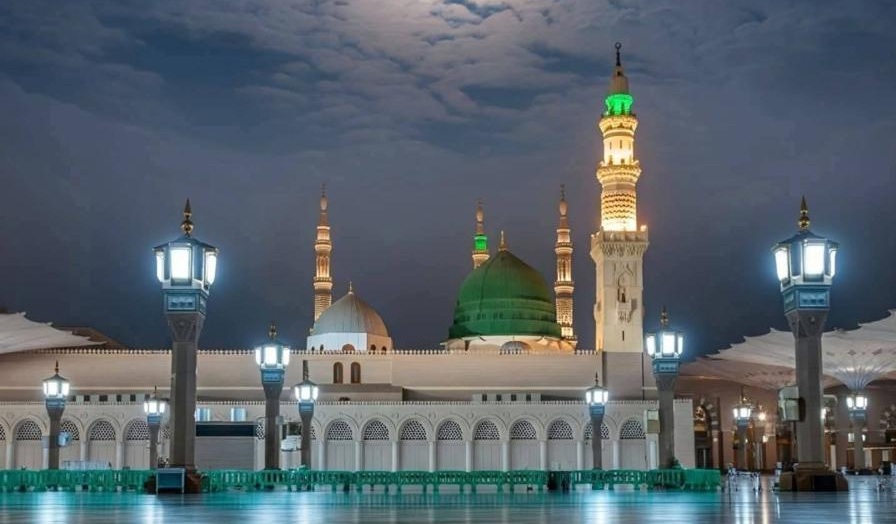
The iconic Green Dome (Al-Qubbah Al-Khaḍrāʾ) marks the heart of the mosque. Beneath it lies the resting place of the Prophet Muhammad (PBUH) and his two closest companions, Abu Bakr al-Siddiq (RA) and Umar ibn al-Khattab (RA).
- Paying Salutations: Visitors walk past the outer railing to offer respectful salutations (Salams), strengthening their spiritual connection to the foundations of Islam.
From Humble Bricks to Modern Grandeur
The mosque’s evolution mirrors the growth of Islamic civilization itself:
- The Foundation (622 CE): Following the Hijrah (migration), the Prophet (PBUH) built a simple structure using mud bricks and palm trunks. It functioned as a prayer hall, a community center, a court, and a school.
- Centuries of Expansion: Successive rulers—including the early Caliphs and the Umayyad, Abbasid, Mamluk, and Ottoman dynasties—continuously enlarged and beautified the site.
- The Modern Era: Recent expansions have transformed the mosque into a colossal complex that accommodates over one million worshippers. Today, it features sliding domes, climate-controlled courtyards, and sophisticated cooling systems.
Essential Etiquette for Your Visit
Visiting such a holy site requires deep reverence. Proper conduct ensures a peaceful environment for everyone:
- Maintain Silence: Speak softly to preserve the mosque’s tranquility.
- Dress Appropriately: Wear modest, clean clothing that respects the sanctity of the space.
- Prioritize Patience: Large crowds require kindness and patience toward fellow worshippers.
- Focus on Devotion: Use your time for Dhikr (remembrance of God), Quran recitation, and reflection.
A Place of Peace and Connection
Al-Masjid an-Nabawi remains a beacon of light for believers worldwide. It offers a unique opportunity to reconnect with Islamic roots and feel a profound bond with the Prophet Muhammad (PBUH). By preparing for this sacred environment, you ensure your journey to Madinah becomes a truly transformative experience.