The Mosque of the Two Qiblas
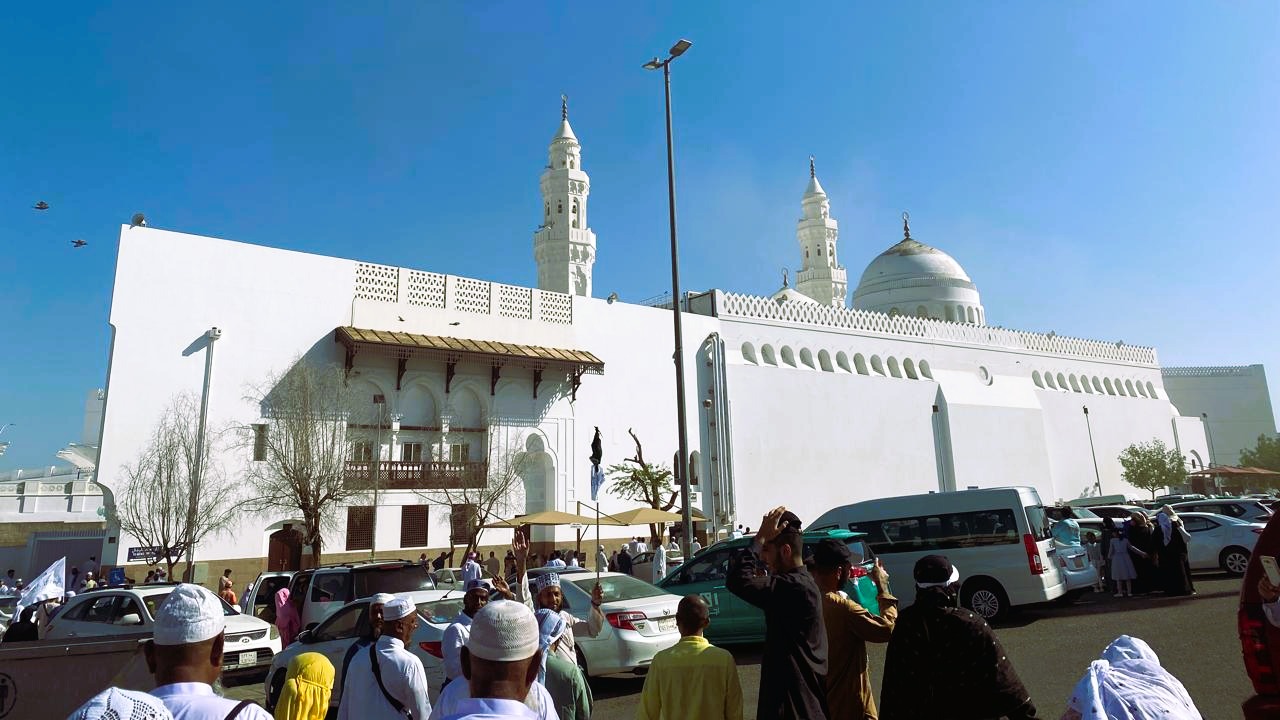
✨In the heart of Medina, Saudi Arabia, stands a mosque that holds a unique place in Islamic history. Masjid al-Qiblatayn (the Mosque of the Two Qiblas) is not just a place of prayer; it is the site of a profound moment of divine revelation that changed the course of Islamic worship forever.
Whether you are planning a pilgrimage or are simply a student of history, understanding the significance of this mosque offers a window into the early days of Islam.
The Historical Turning Point
For the first thirteen years of Islam, Muslims directed their prayers toward Masjid al-Aqsa in Jerusalem. This was the first Qibla (direction of prayer).
In 624 CE (the second year of the Hijra), the Prophet Muhammad (PBUH) was leading the Dhuhr (noon) prayer at this very location. According to Islamic tradition, during the prayer, he received a divine revelation from Allah:
“We have certainly seen the turning of your face, [O Muhammad], toward the heaven, and We will surely turn you to a qibla with which you shall be pleased. So turn your face toward al-Masjid al-Haram…” (Quran 2:144)
Upon receiving this command, the Prophet (PBUH) immediately turned 180 degrees to face the Kaaba in Mecca. The congregation followed his lead without hesitation. From that moment on, the Kaaba became the permanent Qibla for Muslims worldwide.
Architectural Significance
Masjid al-Qiblatayn is one of the few mosques in the world that historically featured two distinct prayer niches (mihrabs).
- The Jerusalem Mihrab: Pointing toward the north.
- The Mecca Mihrab: Pointing toward the south.
During a major renovation in the late 20th century, the mihrab facing Jerusalem was removed to ensure that worshippers would not be confused about the correct direction of prayer. However, a small plaque or symbolic marking often remains to commemorate the original orientation.
Modern Features
Today, the mosque is a stunning example of modern Islamic architecture blended with traditional motifs.
- Twin Minarets: Striking white towers that dominate the skyline.
- The Prayer Hall: A vast, centrally planned space with a large dome that allows for natural light.
- The Courtyard: Designed to accommodate the thousands of pilgrims who visit during Hajj and Umrah seasons.
The Lesson of Al-Qiblatayn
Beyond the stones and the history, Masjid al-Qiblatayn serves as a powerful symbol of obedience and unity. It marks the moment when the Muslim community received its own distinct identity through a shared direction of prayer. It reminds us that while the physical direction may change by divine command, the focus of worship remains the same.